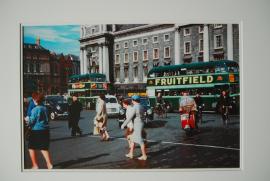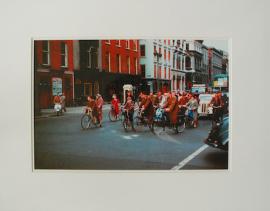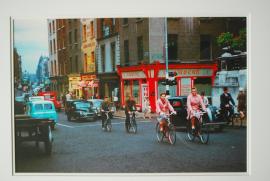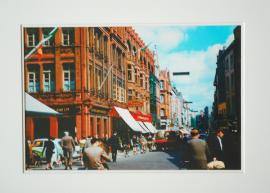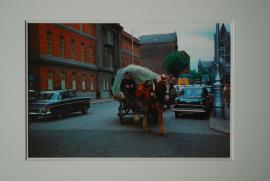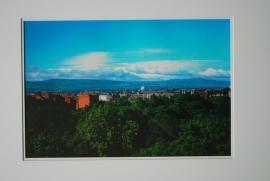
Photos of Dublin Airport, Jacobs Biscuit Factory, Guiness Brewery
Sin título4 photos taken in Grafton Street of Diceman's Dublin funeral procession
Sin títuloYoung photo of U2 taken by Patrick Brocklebank who signed this copy 3 May 2012
Sin títuloBlack and white photo of boys with a black horse
Sin títuloCollection of black and white photographs taken by Brendan Walsh of the North side City Centre
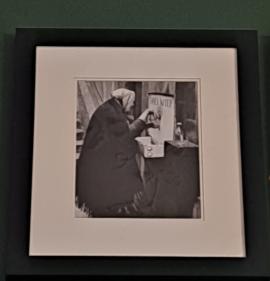
Sin título'Man Waiting by the Shore, Seapoint, Dublin, 1965'. Photograph by Alen MacWeeney 3/20. UCC Collection. Framed.
Sin títuloA black and white photograph showing a number of children outside a tenement house on Henrietta Street.
Throughout the first half of the century, nearly a third of Dublin’s population lived in overcrowded tenements. The tenement system had its origins in the middle of the 19th Century, when Dublin saw an influx of people from the countryside in the wake of the Famine. In the words of archaeologist and historian Christiaan Corlett, “a Dublin solution was found to a Dublin problem,” when many fine Georgian residences were converted to house far more people than they were originally designed to accommodate. In 1913 John Cooke presented his pictorial account of the city’s slums to the Dublin Housing Inquiry. The photographs now form part of the archive of the Royal Society of Antiquaries of Ireland. They represent a grim and highly vivid account of the slum conditions at that time.
Sin títuloA black and white photograph of inside George's Arcade showing shop fronts and two cars parked inside.
The George’s Street Arcade was the first purpose-built shopping centre in Dublin. The current building dates from 1894, after the original was destroyed in a fire. The market was initially unpopular with Dubliners, as neither local architects nor builders were employed, and no Dublin dignitaries were invited to the opening ceremony. A wave of public sympathy for the stallholders followed the fire, and part of the rebuilding costs were paid for by public subscription. Today, fortune tellers, record shops and body piercing studios have taken the place of electrical factors and paper shops. (It remains home to one of Dublin’s great literary retreats, Stokes Books.)
Sin títuloA colour photograph of fruit and veg stalls with seller and pedestrians at a Dublin market. A general view of market stalls selling fruit and vegetables in Dublin, Ireland circa 1950.
Sin títuloA black and white photograph of people arriving for Michael Collins funeral at Glasnevin on 28 August 1922 by Independent Newspapers PLC. The first man on the left is Mr. J. Fitzgerald-Kennedy, the first Minister for Justice in the Provisional Government.
Sin título