Showing 2102 results

Archival description
1012 results with digital objects Show results with digital objects
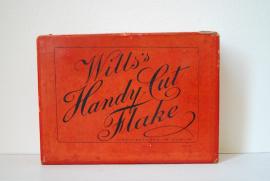
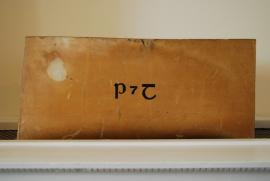
1950s P and T Box
IE LMOD 493 · Item · Twentieth Century

Cardboard box for the post and telegraph with P and T written on the front and back.

LMOD
1950s P and T Post Box
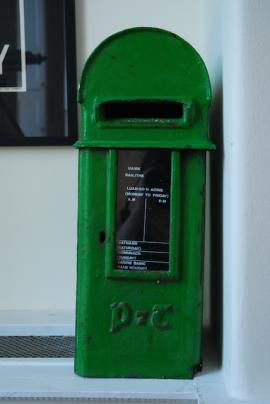
IE LMOD 370 · Item · Twentieth Century

A 1950s green An Post post box with black paper and white writing to show times for collection.

The civil service ran the post and telephone system in Ireland until 1984, when it was replaced by An Post and Telecom Éireann. The Department’s logo – P & T in Gaelic script – can still be seen on manholes covers around the city, at access points to the phone lines.

LMOD
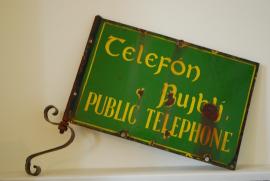
1950s Public Telephone Sign
IE LMOD 353 · Item · Twentieth Century

Green sign with yellow writing 'Telefón Puiblí Public Telephone'

LMOD
IE LMOD 350 · Item · Twentieth Century

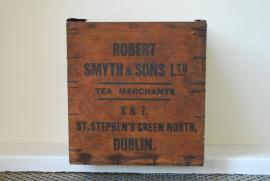
Small wooden chest with black writing 'Robert Smyth and Sons Ltd. Tea Merchant 6 and 7 St. Stephen's Green North, Dublin'

LMOD
1950s Ronnie Drew's Passport
IE LMOD 566 · Item · Twentieth Century

Irish passport of Ronnie Drew from The Dubliners. The left page has Drew's personal details written in, including profession as 'salesman'. The other page has two photos of Drew, one clean shaven black and white photo, the other sepia toned with a metallic look to it and with a beard and embossed with official seal. It's signed 'Ronald Drew'. Both pages are stamped.

Ronnie Drew was a great singer and folk musician, famous as the frontman of The Dubliners. Born in Dún Laoghaire in 1934, he founded the Ronnie Drew Group with Luke Kelly, Barney McKenna and Ciarán Bourke in 1962. Soon after, they changed their name to The Dubliners.

LMOD
1950's Theatre Programmes
IE LMOD 2188 · Item · Twentieth Century

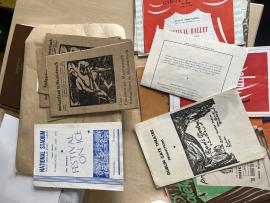
mixed theatre programmes from Gaiety Theatre, Abbey Theatre, Gate Theatre, National Stadium

LMOD
IE LMOD 1151 · Item · Twentieth Century

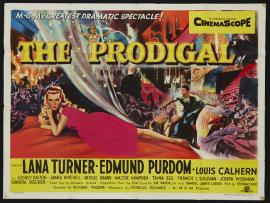
A collection of posters censored by the Irish distributors so as not to offend religious authorities or the sensibilities of Irish audiences at that time. The censorship usually amounts to painting dresses on scantily clad female actors (never on men, interestingly) in varying degrees from covering up low cut dresses to adding dresses or tops to bikini clad girls. Includes Hotel Sahara, 1951, The Prodigal 1955, The Captain's Table 1959, No Love for Johnnie 1961, What A Carve Up 1961, Some Girls Do 1970, and many more. A fascinating and unique collection of Irish social history ephemera of the 1950s to 1970s. (32)

LMOD
1950s Weir and Sons Box
IE LMOD 410 · Item · Twentieth Century

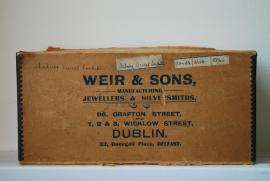
Cardboard Weir and Sons box with dark blue writing ‘Weir and Sons manufacturing Jewellers and Silversmiths. 96 Grafton Street and 1, 2 and 3 Wicklow Street, Dublin. 33 Donegal Place, Belfast.’ Also has two stickers with items ‘Silver Sweet Baskets’ and ‘Candle stick tops’ written on them.

LMOD
IE LMOD 364 · Item · Twentieth Century

Red box with black writing 'Wills's Handy Cut Flake, manufactured in Dublin'. The same is written again inside the box.

LMOD
IE LMOD 325 · Item · Twentieth Century

Partially coloured map of Dublin Port and the Liffey from Eden Quay and O'Connell Street out to sea. 'Dublin Harbour Plan of Shipping Quays, Sheds and Tramways Under the Jurisdiction of the Dublin Port and Docks Board 1951'
Dublin was a port before it was a city. This map shows the quays, sheds and tramways under the jurisdiction of the Dublin Port and Docks Board in 1951. At the time, ships unloaded much further up the Liffey – the port moved downstream with the advent of larger container ships.

LMOD