Showing 188 results

Archivistische beschrijving
127 results with digital objects Show results with digital objects
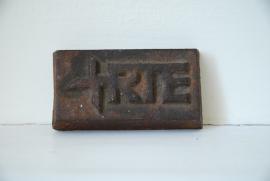
1970s RTÉ Stamp
IE LMOD 356 · Stuk · Twentieth Century

Metal block with raised outline of RTÉ and the St Bridget cross logo.

RTÉ has its origins in 1926, with the creation of 2RN, Ireland’s first radio station. The 1960 Broadcasting act changed its name to Radio Éireann, and made provisions for a new television channel, Telefís Éireann. The introduction of television in 1961 was a major catalyst for social change in Ireland, with imported British and American TV shows and home-grown content like the Late Late Show providing a platform for discussing taboo subjects like contraception and homosexuality.

Zonder titel
IE LMOD 297 · Stuk · Twentieth Century

A print of a black and white photo showing people queueing, including some nuns, to see ‘Love Story’ at the Green Cinema on St. Stephen’s Green taken by Bill Doyle.
A queue for Love Story at the St Stephen’s Green Picture House (known as the Green) in 1971. Many nuns were not allowed to go to the theatre, but because films were censored, they were allowed to go to the cinema. The Green opened in 1935, one of the first to deviate from the lavish style of early cinemas, offering a more relaxed experience with less overbearing décor. The cinema survived until 1987.

Zonder titel
1980 Bagatelle Promo shot
IE LMOD 666 · Stuk · Twentieth Century

A black and white photograph of the band Bagatelle in front of a 46A bus.

Zonder titel
IE LMOD 674 · Stuk · Twentieth Century

Typed letter June 1982 from Jim Aiken, Arnie Pustilnik and Andre Wilkinson in regards to the Rolling Stones playing Slane.
One of Jim Aiken’s first major coups was in persuading the Rolling Stones to play at Slane Castle in 1982. It was only the second time that Lord Henry Mountcharles had staged a large outdoor concert in his natural amphitheatre (Thin Lizzy had played there the previous year, supported by U2). These telex messages hashed out the agreement between the band and the Dublin-based concert promoter. The Rolling Stones would pay for the stage, lighting and support bands out of a $375,000 fee… plus a percentage of ticket sales.

Zonder titel
IE LMOD 717 · Stuk · Twentieth Century

A colour photograph of Muhammad Ali in his boxing gear and standing in a fighting stance outdoors with fields behind him. From Getty 'Muhammad Ali during training on 10 July 1972 for his fight with Al 'Blue' Lewis held at Croke Park in Dublin, Republic of Ireland.'

Muhammad Ali fought Al Lewis in Croke Park in July 1972. The promoter Harry Conrad had always wanted to stage a heavyweight fight, and managed to convince Ali to fight Lewis in Dublin for $200,000. He is shown here training for the fight. Ticket sales were slow, but about 5,000 people managed to sneak in without paying. The fight itself was not very exciting – Lewis barely troubled Ali – but people were still thrilled to see Ali fight. Fans swamped the field around the ring and it took almost half an hour to clear a path back to the dressing rooms.

Zonder titel